

Nicotine Health Risks: Addiction, Effects & Dependence Across UAE 1
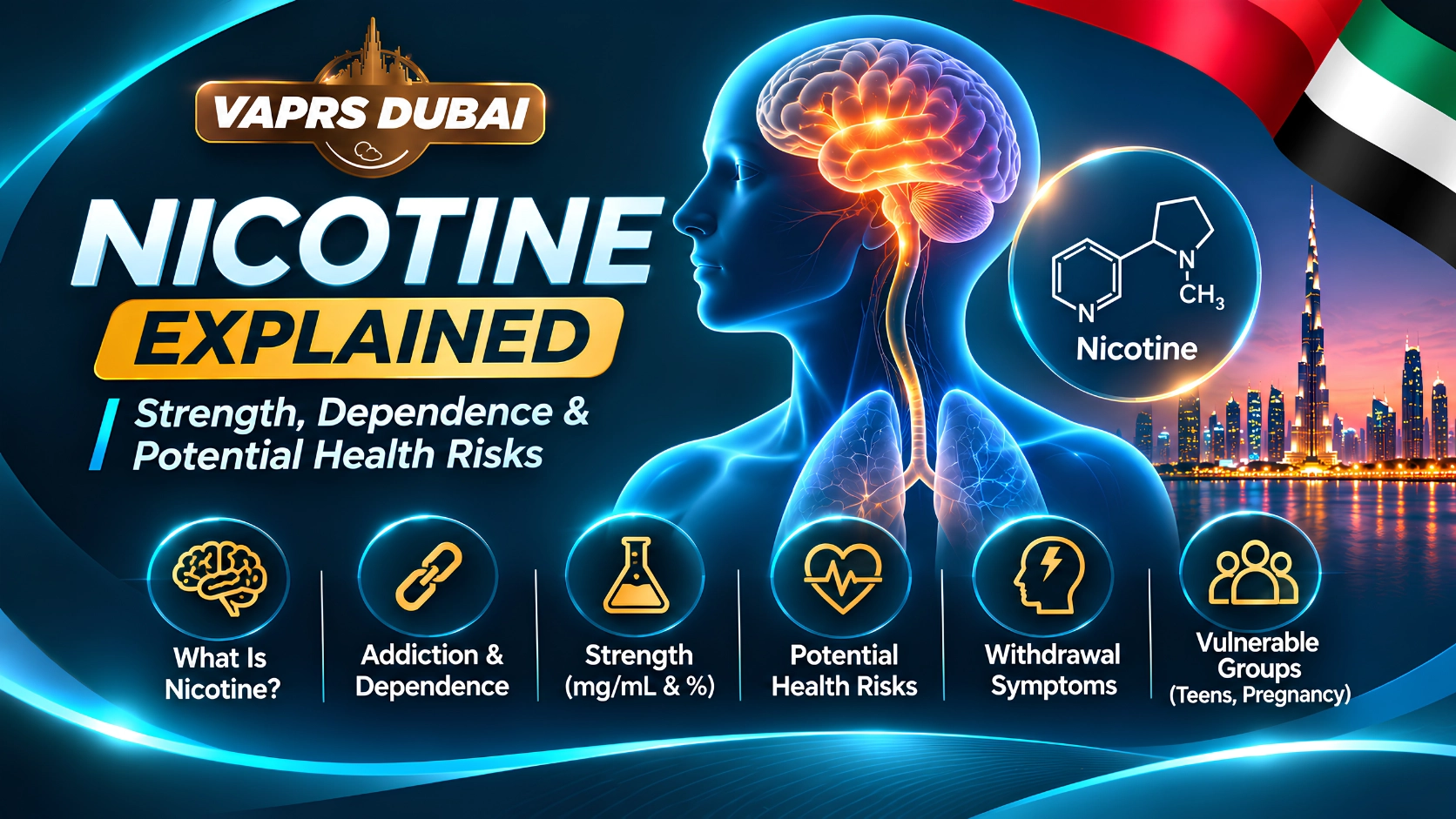
Nicotine Explained: Strength, Dependence and Potential Health Risks
Nicotine is a highly addictive chemical naturally found in tobacco plants. It is present in many tobacco products and most electronic cigarettes. Although people often associate nicotine with smoking, its effects extend beyond the respiratory system and can influence the brain, cardiovascular system and developing bodies.
Understanding nicotine health risks is important for anyone researching nicotine exposure, dependence, withdrawal symptoms or the potential effects of nicotine-containing products.
This educational guide explains what nicotine is, how it affects the body, what nicotine concentration measurements mean, how dependence develops and what health risks are associated with exposure.
Health information notice: This article is for general educational purposes and is not a substitute for professional medical advice. Consult a qualified healthcare professional about personal health concerns or nicotine dependence.
1. What Is Nicotine?
Nicotine is a naturally occurring chemical compound found in tobacco plants. It acts on the nervous system and can produce changes in brain activity, attention, mood and other bodily functions.
Nicotine is classified as an addictive(Nicotine Health Risks) substance because repeated exposure can lead to physical dependence and cravings.
It may be present in several types of products, including:
- Conventional cigarettes.
- Cigars and other tobacco products.
- Electronic cigarettes.
- Heated tobacco products.
- Certain oral nicotine products.
- Medically regulated nicotine replacement products.
Not every product containing nicotine has the same composition, delivery method or health-risk profile.
The health effects of nicotine should also be distinguished from the effects of other chemicals found in tobacco smoke or electronic cigarette aerosol.
2. How Does Nicotine Affect the Brain?
Nicotine interacts with specific receptors in the nervous system known as nicotinic acetylcholine receptors.
When nicotine reaches the brain, it stimulates these receptors and influences the release of chemical messengers, including dopamine.
Dopamine is involved in the brain’s reward and motivation systems.
This interaction helps explain why nicotine can create rewarding sensations and why repeated exposure may contribute to dependence.
Over time, the brain can adapt to repeated nicotine exposure. This may lead to:
- Stronger cravings.
- Increased tolerance.
- Difficulty stopping nicotine use.
- Withdrawal symptoms when nicotine exposure stops.
- Continued use despite an intention to quit.
Nicotine dependence is not simply a matter of willpower. It involves changes in brain function and learned patterns of behaviour.
3. What Is Nicotine Dependence?
Nicotine dependence is a condition in which a person develops a physical or psychological reliance on nicotine.
A person experiencing dependence may feel a strong urge to use nicotine and may find it difficult to stop even when they want to.
Common signs of nicotine dependence include:
- Frequent cravings.
- Feeling uncomfortable when nicotine is unavailable.
- Repeated unsuccessful attempts to stop.
- Increasing tolerance over time.
- Continuing use despite negative consequences.
- Organizing daily activities around nicotine use.
Dependence can develop through repeated exposure, and the time required varies between individuals.
Young people may be particularly vulnerable because their brains are still developing.
4. Understanding Nicotine Strength: mg/mL and Percentages
Nicotine concentration is commonly expressed using two measurements: milligrams per millilitre (mg/mL) and percentage (%).
These measurements describe concentration, not the total amount of nicotine a person absorbs.
What Does mg/mL Mean?
The abbreviation mg/mL means milligrams of nicotine per millilitre of liquid.
For example:
- 5 mg/mL means 5 milligrams of nicotine in each millilitre of liquid.
- 10 mg/mL means 10 milligrams of nicotine in each millilitre of liquid.
- 20 mg/mL means 20 milligrams of nicotine in each millilitre of liquid.
The concentration describes how much nicotine is present within a particular volume of liquid.
What Does Nicotine Percentage Mean?
Some product labels display nicotine concentration as a percentage.
For a weight-per-volume expression, a concentration of 1% w/v is equivalent to 10 mg/mL.
For example, 2% w/v corresponds to 20 mg/mL.
However, percentage labels may use different conventions. The label should be interpreted according to the manufacturer’s stated measurement method rather than assuming that every percentage represents the same calculation.
Concentration Is Not the Same as Absorbed Dose
A common misunderstanding is that the concentration printed on a product label equals the amount of nicotine absorbed by the body.
These are different measurements.
Actual exposure can depend on several factors, including:
- The total amount of liquid involved.
- The quantity used.
- The method of nicotine delivery.
- The device or product characteristics.
- Individual patterns of use.
- The person’s biological characteristics.
Therefore, concentration alone cannot establish an individual’s absorbed nicotine dose or predict their health effects.
5. Potential Health Effects of Nicotine
Nicotine can affect several systems within the body. The nature and severity of these effects depend on factors such as age, exposure, health status and the way nicotine enters the body.
Effects on the Brain and Nervous System
Nicotine acts on the central nervous system.
Potential effects (Nicotine Health Risks) include:
- Changes in attention and alertness.
- Increased dependence and cravings.
- Changes in mood.
- Withdrawal-related concentration difficulties.
- Effects on developing brain function.
The developing brain is particularly vulnerable to nicotine exposure.
Effects on the Cardiovascular System
Nicotine can stimulate the nervous system and produce temporary changes in cardiovascular activity.
These may include:
- Increased heart rate.
- Increased blood pressure.
- Changes in blood vessel activity.
The cardiovascular effects of nicotine are an important consideration, particularly for people with existing health concerns.
Effects During Pregnancy
Nicotine exposure during pregnancy presents particular health concerns.
Nicotine can cross the placenta and expose the developing fetus.
Health authorities warn that nicotine exposure can adversely affect fetal development. Pregnant individuals should seek medical advice regarding nicotine exposure and cessation.
Effects on Children and Adolescents
Children, teenagers and young adults are especially vulnerable to nicotine-related harm.
Brain development continues through adolescence and into early adulthood.
Nicotine exposure during this period may affect brain systems involved in:
- Attention.
- Learning.
- Memory.
- Mood regulation.
- Impulse control.
The WHO and CDC both emphasize preventing nicotine exposure among young people.
6. Nicotine Withdrawal: Symptoms and Effects
When someone who has developed nicotine dependence reduces or stops nicotine exposure, the body and brain must adjust.
This adjustment may produce withdrawal symptoms.
Common nicotine withdrawal symptoms include:
- Nicotine cravings.
- Irritability.
- Restlessness.
- Anxiety.
- Difficulty concentrating.
- Sleep disturbances.
- Low mood.
- Increased appetite.
The intensity and duration of symptoms vary from person to person.
Some individuals experience stronger symptoms during the early stages of stopping nicotine, while others experience a more gradual adjustment.
Withdrawal is a recognized consequence of nicotine dependence. It is not evidence that a person is unable to stop permanently.
7. Nicotine and Electronic Cigarette Aerosol: Understanding the Difference
Nicotine and electronic cigarette aerosol are related but should not be treated as identical.
Nicotine is a chemical substance that may be present in an electronic cigarette liquid.
Electronic cigarettes heat a liquid to create an aerosol that is inhaled.
Depending on the product and its characteristics, the aerosol may contain:
- Nicotine.
- Propylene glycol.
- Vegetable glycerin.
- Flavouring chemicals.
- Fine particles.
- Certain metals.
- Other potentially harmful substances.
The composition can vary between products and exposure conditions.
It is also important to understand that an ingredient being considered safe for ingestion does not automatically mean that inhaling it is safe.
Scientists continue to investigate the short-term and long-term health effects of inhaling electronic cigarette aerosol.
The potential health effects of nicotine should therefore be considered separately from the potential effects of other aerosol constituents.
8. What Is Nicotine Poisoning?
Nicotine poisoning can occur when a person is exposed to an excessive amount of nicotine.
Exposure may happen through swallowing nicotine-containing liquid, absorbing it through the skin or eyes, or other forms of accidental contact.
Children are particularly vulnerable to accidental exposure.
Possible symptoms of nicotine poisoning include:
- Nausea.
- Vomiting.
- Dizziness.
- Headache.
- Excessive sweating.
- Increased heart rate.
- Confusion.
- Weakness.
- Seizures in severe cases.
The symptoms and severity depend on the amount and route of exposure.
What should you do if nicotine poisoning is suspected?
Seek immediate medical assistance or contact local emergency services. Do not wait for symptoms to become severe.
Avoid inducing vomiting unless specifically instructed by a medical professional. If nicotine liquid contacts the skin, remove contaminated clothing and wash the affected area with water while arranging medical guidance.
In the UAE, call 998 for an ambulance in a medical emergency.
9. Second-Hand Exposure to Nicotine and Aerosol
People who do not directly use nicotine products may still be exposed to substances released into the surrounding environment.
Electronic cigarette aerosol is not simply water vapour.
It can contain nicotine and other substances that may be inhaled by people nearby.
The extent of exposure depends on the environment, ventilation, product and frequency of use.
Researchers are continuing to study the potential health effects of second-hand exposure to electronic cigarette aerosol.
Protecting children, pregnant individuals and people with existing health conditions from unnecessary exposure is an important public-health consideration.
10. Can Nicotine Be Addictive Even Without Cigarette Smoke?
Yes. Nicotine dependence is associated with nicotine itself, not exclusively with the smoke produced by burning tobacco.
Nicotine-containing products that do not involve conventional cigarette combustion can still deliver nicotine and contribute to dependence.
However, different products may expose users to different combinations and quantities of harmful substances.
It is therefore important not to assume that a product is harmless simply because it does not produce conventional cigarette smoke.
The WHO states that nicotine is highly addictive and that electronic cigarettes are not safe.
11. Nicotine Dependence and Mental Wellbeing
Nicotine dependence can affect more than physical health.
People experiencing dependence may organize daily routines around nicotine use, experience cravings and feel uncomfortable when they cannot access nicotine.
Withdrawal symptoms can include irritability, anxiety, restlessness and difficulty concentrating.
These experiences may affect:
- Work or study.
- Sleep patterns.
- Personal relationships.
- Daily activities.
- Emotional wellbeing.
The relationship between nicotine, mental health and stress is complex. Nicotine withdrawal may contribute to uncomfortable feelings, while repeated nicotine use can reinforce a cycle of dependence.
People experiencing persistent distress or difficulty stopping nicotine should consider seeking professional support.
12. Understanding Nicotine Health Risks: Important Facts
The following points summarize key information about nicotine:
- Nicotine is a highly addictive chemical.
- Repeated exposure can lead to dependence.
- Nicotine can affect heart rate and blood pressure.
- Exposure can be particularly harmful during pregnancy.
- Adolescents and young adults are vulnerable because their brains are still developing.
- Nicotine concentration and absorbed dose are not the same measurement.
- Electronic cigarette aerosol may contain substances beyond nicotine.
- Accidental exposure to nicotine liquid can cause poisoning.
- Withdrawal may involve cravings, irritability and concentration difficulties.
- Long-term research into some forms of nicotine and aerosol exposure is still developing.
13. Frequently Asked Questions About Nicotine Health Risks
What is nicotine?
Nicotine is an addictive chemical naturally found in tobacco plants. It acts on the nervous system and can influence brain activity, mood and physical dependence.
Why is nicotine addictive?
Nicotine stimulates receptors in the brain and influences dopamine-related reward pathways. Repeated exposure can lead to brain adaptations, cravings and dependence.
What are the potential health risks of nicotine?
Nicotine can increase heart rate and blood pressure, contribute to dependence and create particular risks during pregnancy and brain development.
What does 20 mg/mL nicotine mean?
It means that one millilitre of the liquid contains 20 milligrams of nicotine. This is a concentration measurement, not the amount necessarily absorbed by an individual.
Is nicotine the same as tobacco smoke?
No. Nicotine is a chemical substance, while tobacco smoke is a complex mixture of chemicals produced by burning tobacco. Nicotine can be present in products that do not involve combustion.
Can nicotine affect brain development?
Yes. Nicotine exposure can affect developing brains, particularly during adolescence and young adulthood.
What are common nicotine withdrawal symptoms?
Common symptoms include cravings, irritability, restlessness, anxiety, difficulty concentrating, sleep disturbances and increased appetite.
Can nicotine liquid cause poisoning?
Yes. Accidental swallowing, skin contact or other significant exposure to nicotine-containing liquid can cause poisoning. Suspected poisoning requires immediate medical assistance.
Is nicotine-free electronic cigarette aerosol harmless?
Not necessarily. Electronic cigarette aerosol may contain substances other than nicotine, including particles and potentially harmful chemicals. The absence of nicotine does not establish that inhaling the aerosol is safe.
Where can someone get help with nicotine dependence?
A qualified healthcare professional can assess nicotine dependence and discuss evidence-based support and cessation options. Individuals in the UAE can consult a licensed healthcare provider or an appropriate local health service.
14. Conclusion: Why Understanding Nicotine Matters
Nicotine is a highly addictive substance that can affect the brain, nervous system and cardiovascular system. Its potential effects are especially concerning for children, adolescents and pregnant individuals.
Understanding nicotine concentration, dependence, withdrawal and accidental exposure helps people interpret health information more accurately.
It is equally important to distinguish nicotine itself from the other chemicals that may be present in tobacco smoke or electronic cigarette aerosol.
For reliable information, consult recognized health authorities such as the World Health Organization, Centers for Disease Control and Prevention and the UAE’s relevant healthcare authorities.
Health notice: This article is intended for general education and awareness. It does not diagnose, treat or prevent any medical condition. Seek advice from a qualified healthcare professional for individual health concerns or support with nicotine dependence.
One Comment
Trackbacks and Pingbacks
[…] strength explained in simple terms can help readers understand the measurements printed on nicotine-containing product labels. Two […]